Angle of Perception

Mariana Silva
| 17-06-2026
 · Art Team
You stand in front of a sculpture and feel as though you understand it at first glance.
The form appears stable, the message clear, the presence fixed.
Then you take a few steps to the side—and something changes. A new curve appears, a hidden line emerges, and the work begins to feel different, as if it has changed its identity without physically moving.
This is the subtle power of perspective.
One Form, Multiple Interpretations
A sculpture is rarely experienced fully from a single viewpoint. It exists in physical space, which naturally encourages movement around it. From one angle, it may appear balanced and calm. From another, it may feel dynamic or tense. These differences are not illusions, but natural outcomes of how form interacts with changing viewpoints.
As the viewer moves, the brain continuously reinterprets proportion, depth, and alignment. What first appears simple becomes increasingly layered.
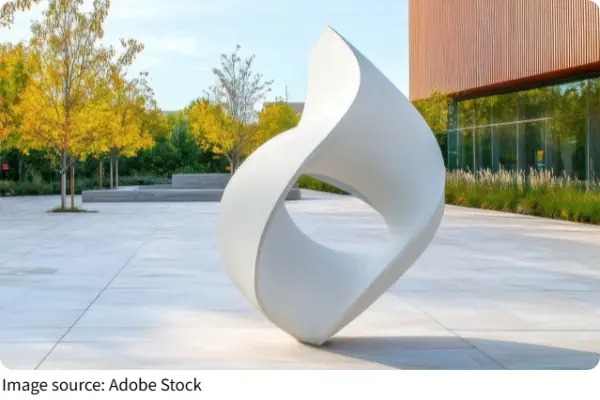
The Role of Distance
Distance influences perception as strongly as angle. Standing close reveals surface texture, structure, and detail. Stepping back reduces complexity into a unified silhouette.
This change also affects interpretation. Close viewing feels intimate and analytical, while distant viewing feels broader and more symbolic.
Although the sculpture remains unchanged, the viewer’s relationship to it shifts, becoming part of the overall experience.
Revealing Hidden Structures
Movement around a sculpture often reveals forms that are not visible from a single position. Elements hidden from the front may become essential from the side or back.
Overlapping shapes expose depth. Internal lines guide unexpected visual movement. Negative space becomes a defining feature rather than a background element.
This unfolding experience creates a sense of discovery, as if the sculpture is gradually revealing itself over time.
Perspective and Visual Effects
Sculpture explores how human vision interprets three-dimensional space. A structure that appears narrow from one angle may appear wide from another. A straight line may seem curved depending on viewpoint.
These effects are not distortions, but natural results of how perception responds to spatial form.
As the viewer moves, perception is continuously adjusted, creating subtle and engaging shifts in understanding.
Sculpture as a Sequence of Views
Rather than a single fixed image, sculpture is experienced as a sequence of changing perspectives. Each step around it functions like a new frame in a visual narrative.
There is no single correct viewpoint. Every angle offers a different interpretation, and together these perspectives form a more complete understanding.
For this reason, stillness alone often feels incomplete. The artwork is designed to be experienced through movement.
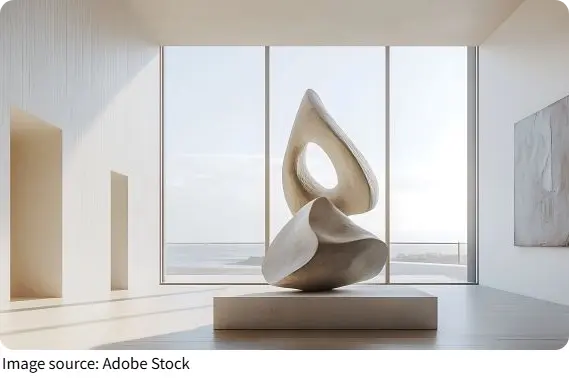
Ultimately, sculpture is not only about physical form but also about spatial experience. As the viewer moves around it, meaning does not remain fixed. It shifts, expands, and transforms depending on perspective, creating a dynamic relationship between object and observer.