Red Deer Rhythm

Chandan Singh
| 08-05-2026
 · Animal Team
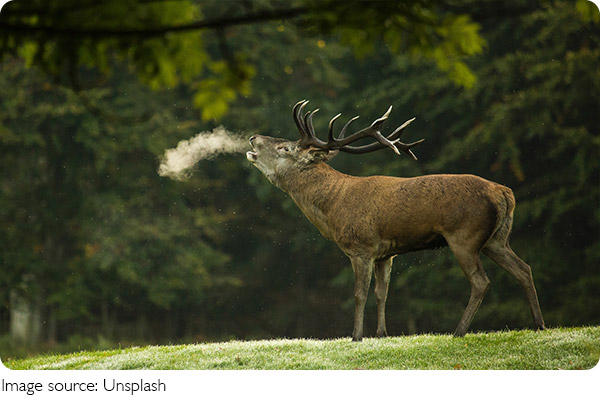
A deep sound echoes through open woodland before anything is seen. Then, slowly, a large shape moves between trees—steady, confident, and fully present in its space.
The Red Deer is one of those animals that feels both familiar and impressive at the same time, not because it tries to stand out, but because it naturally does.
There's a calm strength in how it moves.
Even when still, it feels aware of everything around it, as if the environment is part of its rhythm rather than something separate.
What makes it visually distinct
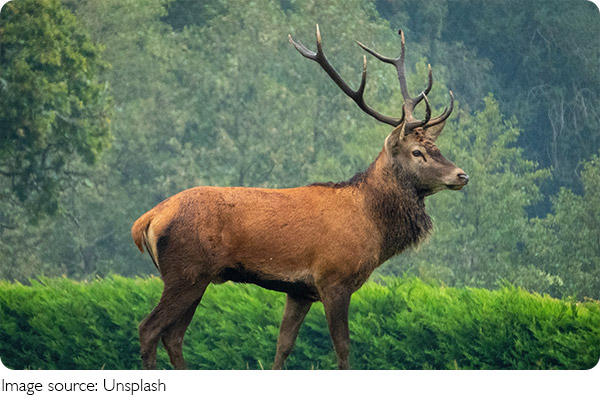
Red Deer are known for their size and strong frame. Compared to other deer species, they appear more solid and structured, especially in mature males. Their coat typically shifts with the seasons—lighter tones in warmer months and thicker, deeper shades when it gets colder.
One of the most recognizable features is the antler structure on males. These antlers branch outward and upward, growing larger and more complex over time. They are shed and regrown annually, making them a changing feature rather than a fixed one.
Females are smaller and do not develop antlers, but share the same steady body shape and alert posture.
How they move and behave
Movement in Red Deer is controlled and deliberate. Even when walking across open land, their steps feel measured. When they run, the motion becomes powerful but still balanced, covering ground efficiently without losing stability.
They tend to be more active during early morning and late evening hours. During these periods, they move between feeding areas and resting spots, following patterns that feel consistent over time.
Alertness is constant. Their ears rotate frequently, and their posture often shifts slightly as they monitor surroundings. This awareness is part of their everyday behavior rather than a reaction to specific events.
Feeding habits and environment
Red Deer adapt their feeding based on what is available. In open areas, they often graze on grasses and low vegetation. In forested regions, they shift toward leaves, shoots, and other plant material.
This flexibility allows them to live in different landscapes, from dense woodlands to open hills. Their diet changes with the seasons, matching what nature provides at different times of the year.
Feeding usually happens in quiet periods, when movement in the environment is lower and conditions feel stable.
Social structure and group life
Red Deer often form groups, but the structure changes depending on season and context. Females and younger deer may gather in herds, offering shared awareness and protection.
Males tend to move separately outside of specific periods, sometimes forming small groups or staying alone. During certain seasonal periods, their behavior becomes more focused on interaction and territory.
Communication happens through sound, movement, and posture rather than constant contact. Even distance between individuals still feels coordinated.
Seasonal changes and natural cycles
One of the most noticeable changes in Red Deer behavior comes with the seasons. Their coats adjust for temperature, becoming thicker and more protective in colder conditions.
Antler growth is another seasonal cycle unique to males. It reflects both physical condition and timing within the year. Once fully developed, antlers play a role in interaction between males during specific periods.
These cycles are not abrupt—they follow a steady rhythm shaped by environment and time.
Why they stand out in nature
Red Deer are often remembered not just for their size, but for their presence. They occupy space in a way that feels grounded, almost steady like part of the landscape itself.
Seeing one in the wild often leaves a strong impression—not because of dramatic action, but because of quiet confidence. They don't rush the moment. They exist in it fully.
In the end, Red Deer represent a balance of strength and calm awareness, shaped by rhythm rather than speed.