Elk Facts

Chandan Singh
| 24-04-2026
 · Animal Team
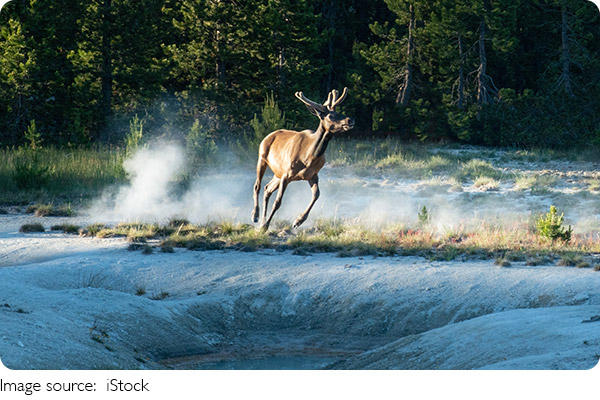
A dense forest suddenly breaks into open marshland, and a massive silhouette steps forward through the mist.
Long legs move carefully through wet ground, antlers rising like branching architecture above the head.
This is the elk, one of the most impressive large mammals in the northern hemisphere, known for its size, adaptability, and seasonal transformations.
Antlers That Change Every Year
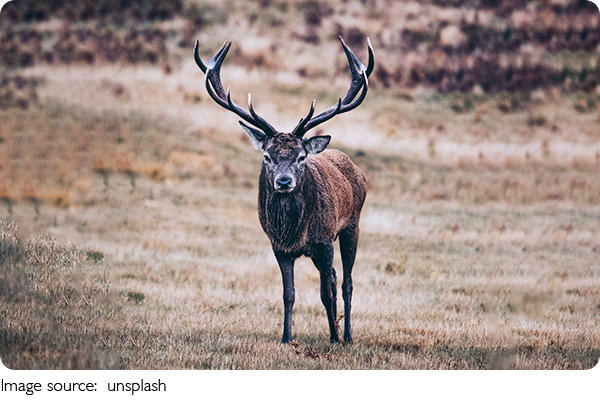
One of the most remarkable features of elk is their antlers, which grow and shed annually. Unlike permanent structures, these antlers are living tissue during growth and can develop at astonishing speed in spring and summer.
Growth is influenced by age, nutrition, and environmental conditions. During peak development, antlers are covered in a soft, blood-rich layer that supports rapid expansion before hardening later in the season.
Once fully developed, they are used for display and competition during mating season, after which they are naturally shed and regrown.
Built for Cold and Changing Seasons
Elk are highly adapted to environments with strong seasonal variation. Their thick coat changes throughout the year, becoming dense in colder months and lighter when temperatures rise.
Their body structure supports endurance across long distances, allowing them to migrate between feeding areas as conditions shift.
Social Structure in Herds
Elk live in organized groups that change depending on season and age structure.
• Females and young often form stable herds
• Males tend to be more solitary outside mating periods
• Group movement improves protection and resource access
This flexible structure allows elk to adapt to both open landscapes and forested regions.
Communication and Behavior
Elk rely on vocal sounds, body posture, and movement patterns to communicate across distances. During mating season, males produce deep calls that can travel long ranges through forests and valleys.
These signals help establish presence, territory, and readiness for interaction with others in the population.
Feeding Habits and Diet
Elk are herbivores with a highly adaptable diet. They feed on grasses, shrubs, bark, and tree shoots depending on seasonal availability.
Their feeding behavior changes with environment:
• In summer, they graze in open areas
• In colder months, they rely more on tree-based vegetation
• Near water sources, they often feed in marshy zones rich in plant diversity
This flexibility allows them to survive in varied habitats.
Movement and Migration Patterns
Many elk populations follow seasonal migration routes between highland and lowland areas. These movements are guided by temperature, food availability, and snow depth.
They often travel in predictable patterns, returning to familiar feeding grounds year after year, which helps maintain stability within herds.
Role in Ecosystems
Elk play an important role in shaping vegetation patterns. Their grazing influences plant growth, and their movement helps distribute nutrients across large areas.
Through feeding and migration, they contribute to maintaining ecological balance in forest and grassland environments.
Why Elk Remain Fascinating
What makes elk particularly interesting is the combination of scale and adaptability. They are among the largest land mammals in their range, yet they move with surprising agility through forests, wetlands, and open plains.
Their life cycle—marked by seasonal transformation, migration, and regrowth—reflects a continuous rhythm shaped by environment rather than fixed behavior.
In many ways, elk represent a system of natural adaptation where size, strength, and flexibility work together to ensure survival across changing landscapes.