Flamingo Migration

Santosh Jha
| 05-03-2026
 · Animal Team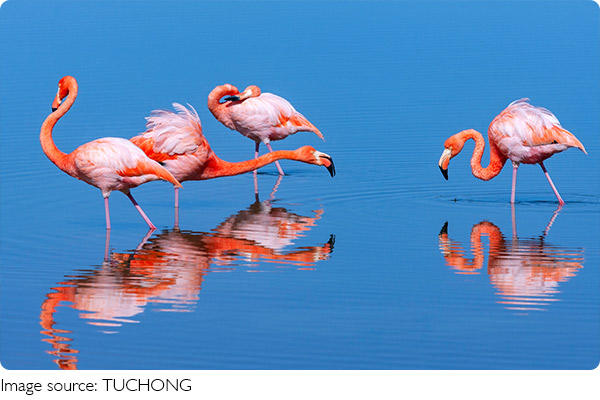
Watching a flock of flamingos in flight is like seeing a living pink ribbon drifting across the sky.
Their coordinated movements and long-distance journeys leave one wondering how such delicate-looking birds manage to traverse hundreds of miles between habitats.
These seasonal migrations are not random; they are a finely tuned response to environmental cues, food availability, and breeding needs.
Seasonal Journeys Across Continents
Why Flamingos Migrate
Flamingos are highly sensitive to changes in water levels and food abundance. As shallow lakes dry up or become too salty, these birds are forced to seek new feeding grounds. Migration allows them to access areas rich in algae, plankton, and crustaceans, which are essential for maintaining their energy and vibrant coloration.
Typical Migration Routes
Different species follow different paths. Greater flamingos in Africa may travel between salt flats in the Rift Valley and coastal lagoons, while Caribbean flamingos move across islands in search of protected shallow waters. Some populations cover distances of over 500 kilometers in a single migration, often flying in large V-shaped formations to conserve energy.
Timing and Environmental Triggers
Rainfall patterns, temperature changes, and water salinity all signal the time to move. Flamingos are particularly adept at detecting the earliest signs of drying lakes or declining food supplies, allowing them to leave before resources become critically scarce.
Adapting to Diverse Habitats
From Salt Flats to Coastal Lagoons
Flamingos can thrive in both inland and coastal wetlands. Salt flats provide abundant crustaceans and brine shrimp, while coastal lagoons often offer more stable water levels. These birds adjust their feeding techniques depending on water depth and prey type, demonstrating remarkable behavioral flexibility.
Nesting in Extreme Conditions
Breeding habitats are chosen carefully. Flamingos build mud mound nests in isolated areas, sometimes on islands surrounded by water that fluctuates seasonally. These mounds prevent eggs from flooding and offer protection from predators, showing how their nesting behavior adapts directly to environmental conditions.
Coping with Climate Variability
Flamingos have survived in some of the harshest habitats on Earth, including alkaline lakes and semi-arid regions. Their long legs, specialized beaks, and webbed feet allow them to feed efficiently even in extreme conditions. These adaptations are crucial as changing climates force some populations to explore new territories or face food shortages.
Interconnected Ecosystems
Reliance on Wetlands
Flamingos are indicators of wetland health. The availability of shallow, nutrient-rich waters dictates their movements. When wetlands are altered or degraded, flamingos are forced to relocate, sometimes covering even greater distances to find suitable feeding and breeding sites.
Interaction with Other Species
During migration, flamingos often share habitats with other waterbirds, competing for food while also benefiting from collective predator awareness. Their flocking behavior enhances survival, demonstrating that migration is as much about social coordination as environmental adaptation.
Human Impacts
Urban expansion, water extraction, and pollution can disrupt traditional migration routes. Some flamingos now utilize artificial lakes or protected reserves, showing their ability to adapt but also highlighting the need for conservation efforts to maintain natural wetland networks.
Watching flamingos traverse the skies season after season is a reminder of the resilience and adaptability of wildlife. Their migrations illustrate not just survival instincts but a delicate balance with the environment. Protecting wetlands and respecting natural water cycles ensures that these iconic birds will continue their remarkable journeys, inspiring awe for generations to come.